


Best Skincare for Menopausal Skin in Ireland: Dryness, Redness, Fine Lines & Firmness

There can come a point during perimenopause or menopause when the skincare routine you have relied on for years suddenly does not feel quite right. Your moisturiser is no longer moisturising enough.
Skin that was once fairly resilient starts reacting to products it previously tolerated. Pigmentation seems more noticeable. The jawline feels a little less firm. Fine lines appear easier to see, particularly when the skin is dry.
And the temptation is to fix everything at once. A stronger retinol. A richer cream. Another serum. An exfoliating acid for the dullness.
But changing skin often needs the opposite approach.
Menopause can be associated with changes in skin dryness, collagen and elasticity as hormone levels change. Dermatologists also note that skin can become drier and that loss of firmness and wrinkles may become more noticeable.
The best skincare for menopausal skin is therefore not about using as many anti-ageing ingredients as possible. It is about understanding what has changed in your skin and choosing ingredients for that concern.
Here is how to build a menopausal skincare routine that actually makes sense.
What Happens to Your Skin During Menopause?
There is no single “menopausal skin type”. Some women notice significant dryness. Others notice redness or increased sensitivity.
Some continue to experience breakouts while also developing fine lines. Acne can also occur around menopause as hormone levels change.
Other common concerns can include:
- Dry or tight-feeling skin
- Dehydration
- Increased sensitivity
- More noticeable redness
- Fine lines and wrinkles
- Loss of firmness
- Uneven-looking texture
- Dullness
- Pigmentation and dark spots
- Changes in breakouts
This is why buying skincare based purely on age rarely works. Two women of the same age can need completely different routines.
What Is the Best Skincare Routine for Menopausal Skin?
For most skin, I would build the routine around five priorities:
You can then adapt the routine depending on whether dryness, redness, pigmentation or firmness is bothering you most.
1. Start With Dryness and Dehydration
One of the most noticeable changes around menopause can be that skin simply does not hold onto moisture in the way it used to.
Perhaps your moisturiser used to last all day. Now your cheeks feel tight by lunchtime. Or makeup that once looked smooth begins settling into areas that suddenly look dry.
Before adding another active ingredient, fix this first.
Choose a Gentle Cleanser
Cleansing should leave menopausal skin feeling clean, not stripped. If your face feels tight immediately after washing, your cleanser may be too aggressive for what your skin needs now.

For skin that has become dry, sensitive or redness-prone, Medik8 Calmwise Soothing Cleanser is one gentle option. It is formulated for sensitive and irritated skin and contains glycerin to support hydration.
Shop Calmwise CleanserAdd Hydration Where Needed
A hydrating serum can be particularly useful if the skin feels tight, looks crepey or fine dehydration lines become more obvious.

Medik8 Hydr8 B5 Intense combines multi-weight hyaluronic acid with vitamin B5 and is designed to provide intensive hydration and help skin appear smoother and plumper.
Shop Hydr8 B5 IntenseExpert Tip
If your skin is dry and dehydrated, a serum alone may not be enough.
Think:
Hydrating serum → moisturiser
The serum helps bring hydration into the routine. The moisturiser helps support the barrier and reduce moisture loss.
2. If Your Skin Has Become More Sensitive or Red
One of the biggest mistakes with changing skin is assuming that every new concern needs a stronger active.
Your skin looks dull, so you exfoliate.
Then it becomes red, so you add another serum.
Then the redness makes texture look worse, so you exfoliate again.
Soon, you are treating irritation caused by the routine rather than the original concern.
If your skin has become:
- Red
- Easily irritated
- Tight
- Hot or uncomfortable
- More reactive than usual
Strip the routine back. Focus first on gentle cleansing, hydration and barrier support.

Medik8 Calmwise Serum is one Eden option specifically designed for sensitive, irritated and redness-prone skin.
Shop Calmwise SerumA simple routine may be all you need initially:
↓
Calming serum
↓
Moisturiser
↓
SPF in the morning
Give the skin time before adding stronger actives.
And remember that persistent redness is not automatically caused by menopause. Conditions such as rosacea can also cause facial redness, so ongoing or worsening symptoms deserve professional assessment.
3. Pigmentation and Dark Spots During Menopause
Perhaps dryness is not the change bothering you most.
For many women, it is uneven tone.
Old sun damage can become increasingly noticeable with age, while pigmentation can make the complexion look less even even when the skin itself feels healthy.
This is where targeted skincare can help.
But do not try to fade pigmentation by throwing every brightening ingredient into one routine.
Look for Targeted Pigmentation Ingredients
Ingredients commonly used in pigmentation-focused skincare include:
- Vitamin C
- Niacinamide
- Tranexamic acid
- Retinoids
- Carefully selected exfoliating acids
- Daily UV protection
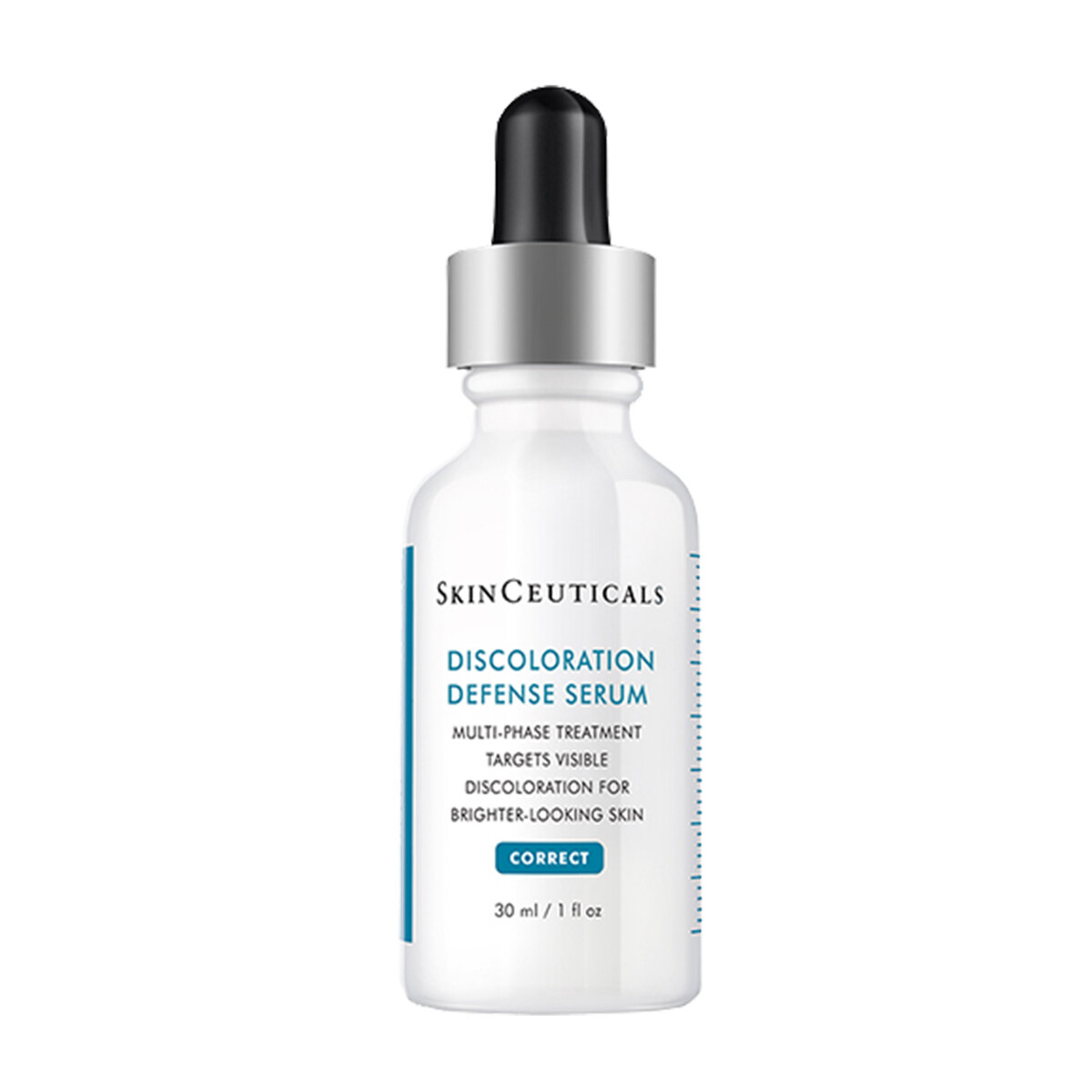
For a dedicated pigmentation serum, SkinCeuticals Discoloration Defense combines 1.8% tranexamic acid, 5% niacinamide and 5% HEPES and is designed around brown patches, post-blemish marks and uneven-looking tone.
Shop Discoloration DefenseBut even the best pigmentation serum needs patience. Dark spots rarely disappear in a week.
Consistency matters more than constantly switching products.
4. Skin Starting to Feel Less Firm? Focus on Collagen Support
This is one of the biggest changes women often talk about.
It is not necessarily one dramatic wrinkle.
It is more subtle.
The cheeks feel slightly less supported. The jawline does not look quite as defined. Skin seems to have less bounce.
If your skin is starting to feel less firm or look less lifted, focus on collagen-supporting and skin-strengthening ingredients.
Expert Recommendation
Think: Protect + Stimulate + Hydrate
Peptides
Support collagen and can help improve the appearance of firmness.
Retinol or retinal
Encourages skin-cell turnover and supports collagen production.
Vitamin C
Provides antioxidant protection while supporting collagen.
SPF
Essential for helping protect skin against UV-related collagen breakdown.
That gives us a much clearer firming strategy than looking for one product labelled “lifting”.
SPF + antioxidants
Peptides + vitamin A
Hyaluronic acid + barrier-supporting moisturiser
This is the approach I would build a firming routine around.
5. Peptides for Menopausal Skin
Peptides are particularly useful to consider when the biggest concern is:
- Loss of firmness
- Fine lines
- Less plump-looking skin
- Changes in elasticity
- Skin that simply does not seem to “bounce” as it once did

For a dedicated peptide serum, Medik8 Liquid Peptides Advanced MP is one of the strongest options within the Eden SkinStore range.
It contains a 30% multi-peptide complex and is designed around visible firmness, hydration and the appearance of fine lines.
Shop Liquid Peptides Advanced MPBest For
Someone saying:
That is different from someone saying:
The second skin needs calming and barrier support before you start building an advanced anti-ageing routine.
6. Can You Use Retinol During Menopause?
Yes. But this is where more powerful does not automatically mean more effective. Retinoids are well established within anti-ageing skincare.
However, menopausal skin may also be drier or more reactive.
So if you are starting vitamin A for the first time:
A Gentle Place to Begin

For someone new to vitamin A or with more sensitive skin, Medik8 Crystal Retinal 1 is Eden's introductory Crystal Retinal strength. It is designed as a gentle entry point into retinal.
Shop Crystal Retinal 1Once skin becomes accustomed to retinal, the Medik8 Crystal Retinal range allows gradual progression through stronger levels rather than immediately starting with a high-strength product.
A Simple Retinal Evening
↓
Crystal Retinal
↓
Nourishing moisturiser
That is enough.
You do not need an exfoliating toner, acid serum, peel and retinal on the same night.
7. Vitamin C Deserves a Place in the Morning Routine
Retinal gets much of the attention when we talk about ageing skin. Vitamin C deserves its own place.
A well-formulated vitamin C serum provides antioxidant protection and can help improve the look of dullness and uneven tone while supporting a routine focused on visible ageing.

For normal-to-dry or mature skin, SkinCeuticals C E Ferulic is a premium Eden option.
The formula combines:
- 15% L-ascorbic acid
- 1% vitamin E
- 0.5% ferulic acid
It is designed around antioxidant protection, visible firmness, fine lines and discolouration.
Shop C E FerulicWhere Does Vitamin C Go?
↓
Vitamin C
↓
Moisturiser
↓
SPF
You do not need to make it more complicated.
8. Do Not Forget the Moisturiser
When we talk about menopausal skincare, the expensive treatments tend to get all the attention.
Retinal.
Peptides.
Vitamin C.
Pigmentation serums.
But when skin becomes drier, your moisturiser may be the product you notice the biggest difference from day to day.

For an evening routine, particularly one containing vitamin A, Medik8 Advanced Night Restore is a useful option.
It contains ceramides and antioxidants and is designed to support the skin barrier while locking in moisture.
Shop Advanced Night RestoreIt also pairs naturally with Crystal Retinal.
Cleanse → treatment → moisturise.
Three steps done consistently can outperform a complicated routine you cannot maintain.
9. SPF Is Part of Your Firming Routine Too
When someone asks for the best product for firmer-looking skin, sunscreen is probably not the exciting answer they expect.
But it belongs in the conversation.
UV exposure contributes to premature skin ageing, which is why sun protection is a foundation of an anti-ageing skincare routine.
And yes, this matters in Ireland.
So when we say:
SPF is the protect part.
Do not build an expensive collagen-supporting routine and then forget to protect your skin from UV.

For those who prefer a lightweight daily texture, Beauty of Joseon Relief Sun SPF50+ Rice + Probiotics provides a lightweight SPF50 option designed without a visible white cast.
Shop Relief Sun SPF50+The Best Morning Skincare Routine for Menopausal Skin
You do not need every product mentioned in this article.
Choose according to your biggest concern.
Morning
The Best Evening Skincare Routine for Menopausal Skin
A Routine for Dry Menopausal Skin
Morning
Evening
Keep it simple until the skin feels comfortable.
Then introduce other actives if you actually need them.
A Routine for Menopausal Skin Losing Firmness
If firmness is your main concern, remember the expert formula:
Protect + Stimulate + Hydrate
Morning
Vitamin C
Antioxidant support
Peptides
Firmness support
Moisturiser
Hydration
SPF
Protection
Evening
Retinal
Supports cell turnover and collagen
Moisturiser
Supports hydration and the skin barrier
You do not need to stimulate the skin every night.
Recovery evenings can include peptides or hydration instead.
A Routine for Pigmentation and Menopausal Skin
Morning
Evening
The most important ingredient in a pigmentation routine is often something less exciting:
What Should You Buy First?
This is where skincare becomes much easier.
If your skin feels dry and tight
Start with:
Hydrating serum + moisturiser
If your skin has become sensitive or red
Start with:
Gentle cleanser + calming serum + moisturiser
Do not make retinol the first purchase.
If pigmentation is your main concern
Start with:
Targeted pigmentation serum + daily UV protection
If your skin feels less firm
Build around:
Peptides + vitamin C + vitamin A + SPF + good hydration
Remember: Protect + Stimulate + Hydrate.
If fine lines and texture concern you most
Consider:
A gradually introduced retinal + moisturiser + morning SPF
If everything suddenly seems wrong
This is the most important one.
Do less.
Begin with:
Cleanse → Hydrate → Moisturise → Protect
Once the skin feels comfortable again, introduce one targeted treatment.
6 Menopausal Skincare Mistakes to Avoid
1. Choosing Products According to Age Instead of Skin Concern
You do not suddenly require a completely different skincare category because you reached 50.
Your skin condition matters more.
2. Assuming Stronger Retinol Will Give Faster Results
Consistency and tolerance matter.
A lower-strength retinal you can use regularly is more useful than a stronger formula that leaves you constantly irritated.
3. Trying to Exfoliate Away Dryness
Dry skin does not necessarily need exfoliation.
Sometimes it needs lipids, hydration and rest.
4. Using Too Many Active Ingredients
Retinal + acids + strong vitamin C + exfoliating toner every night is not automatically a superior routine.
5. Treating Redness as Normal
New or persistent redness can have several causes.
If it continues or worsens, have it professionally assessed.
6. Building Collagen Support but Forgetting SPF
If firmness is the goal:
Protect + Stimulate + Hydrate.
Do not forget the first word.
Menopausal Skin Does Not Need a 12-Step Routine
There is something liberating about skincare at this stage of life.
You know your face. You know which textures you enjoy.
You probably already know that owning an expensive serum does not make you use it. So rather than starting again, refine what you already have.
Keep the cleanser that leaves your skin comfortable. Upgrade the moisturiser if dryness has increased. Add hydration if skin is dehydrated.
Introduce retinal slowly if fine lines and texture matter to you. Use peptides when firmness becomes a bigger priority.
Target pigmentation if that is what bothers you. And protect the whole routine with SPF.
That is far more useful than filling a shelf with products labelled “50+”.
Find What Your Skin Needs Now
Explore expert-selected skincare for hydration, firmness, pigmentation, sensitivity and changing skin.
Shop Anti-Ageing Skincare- Tags: Menopausal Skin


